The Book
Music in the Flesh
An Early Modern Musical Physiology
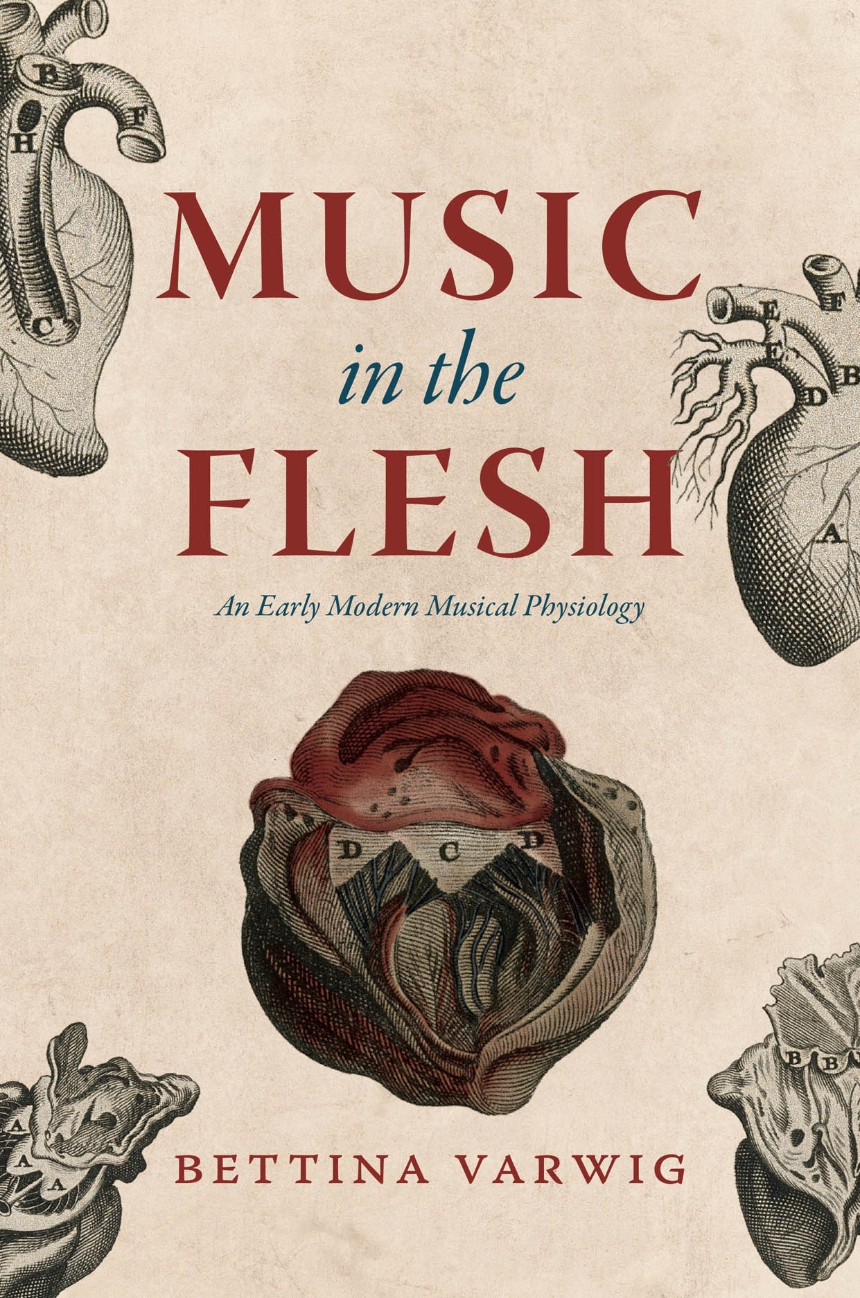
My book Music in the Flesh: An Early Modern Musical Physiology (Chicago, 2023) reimagines the lived experiences of people making music—composers, performers, listeners—in seventeenth- and early eighteenth-century Europe. It explores how music affected and reshaped them in body, soul and spirit.
There are countless historical testimonies describing the powerful effects of music on the human body. My book explores musical, philosophical, anatomical, medical, theological and devotional writings of the time to show that these historical bodies were porous, flowing, ensouled, and easily permeated and transformed by musical sound.
These ideas challenge the mind-body dualism that underpins our modern-day understanding of human nature. Instead, they affirm a more integrated vision, in which body, soul and spirit are inextricably entangled. Music could make those whole human body-souls resonate, expand with joy, contract with despair, cry and dance.
Selected reviews:
Varwig’s ambitious, highly original, beautifully crafted book dares to attempt a thorough and thoroughly believable phenomenological account of how humans in the long seventeenth century were likely to have experienced and understood music with their bodies as well as with their minds. Music in the Flesh is rich with implications for how we as a culture acquired and reified certain musical values. It is nothing less than a primer in a completely new way of thinking about scores, verbal descriptions of musical performances, and performances both live and recorded.
— Suzanne Cusick, New York University
Varwig’s brilliant book brings to life—almost literally—the wonderfully vivid writing of early modern theorists on the entanglement of music with the ‘ensouled bodies’ of its listeners and makers. The result is a gripping account of an astonishing body of historical writing that has prescient connections with twenty-first-century thinking about music and the embodied mind, and which urges its readers to experience the music of that period in richly transformed ways.
— Eric F. Clarke, University of Oxford
Deeply researched, artfully constructed, analytically inspired, Music in the Flesh: An Early Modern Musical Physiology poses the difficult and compelling question: ‘What was it like to be a musicking subject—to compose, play, or hear music—in the early modern period?’ … Varwig triangulates between many kinds of evidence in order to reconstruct how composers, musicians, and listeners felt music, and felt musical, before Enlightenment principles recast human subjectivity in modern guise. The result is breathtaking, as much a rousing call to carnalize our scholarly dispositions as it is an ambitious project of sensorial sympathy with early modern persons.
— Renaissance Quarterly